Leg brace for NZ
A leg brace for a dog with diagnosed carpal hyperextension post-pancarpal arthrodesis surgery. See below the client email brief.


Stabilization and protection during off-leash activity.
Comfort, durability, and weather resistance.
Precisely fit NZ’s limb anatomy.
Carpal hyperextension without surgery
Pancarpal arthrodesis surgery


Post-pancarpal arthrodesis surgery orthotic brace precedents


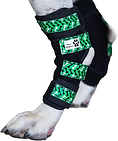

Orthotic dog brace precedents


Orthotic brace for other animals precedents
Orthotic brace for humans precedents


Brace Information
The human equivalent of pancarpal arthrodesis in dogs is total wrist arthrodesis. While both surgeries have the same goal, the functional demands on the forelimbs post-surgery differ significantly between dogs and humans.
In humans, wrist braces are designed to provide stability through direct compression on the wrist, with a loop around the thumb to distribute force and ensure additional stability. The design leaves the fingers free to move, allowing for fine motor control.
In contrast, dogs do not require the same dexterity in their forelimbs. After wrist fusion, the focus of a canine brace would be on immobilizing the joint to promote healing while allowing the shoulder and elbow to compensate for the loss of wrist motion.
There should be a force distribution plate situated on the metal plate to help dissipate any force evenly across the plate.
The brace should provide support and stability, ensuring proper weight distribution and protecting the upper limbs from excessive strain.


Material Study
Consider the additional weight burden the orthosis will place on the patient’s injured extremity. If possible, choose a material that meets all the above criteria and is the lightest weight possible.
Rigid components are made from hard plastic or a lightweight metal alloy for support.
Perforated materials should be incorporated to reduce heat and weight.
Strap system to easily lock the brace on the limb.
Rigid Component
Low Temperature Thermoplastic:
High strength and rigidity for intense activity. Mouldability to NZ's leg through 60-70°C heating process. Highly durable material to repeated stresses.
2.5-3.2 mm thick materials can be used to make orthoses for large adults.
Potential options:
Orfit Aquafit
Rolyan Aquaplast
Rolyan Ezeform - needs coating for water use
Reinforced plate within the brace structure to further
strengthen load resistance?
Cushion Component
Padding


Breathable
Water resistance


Active3D™ is a thermoformable, closed-cell, waterproof foam that reduces pressure and prevents abrasions from splints. It’s sweat-resistant, easy to clean, and ideal for custom orthopedic braces with self-gripping layers.

ActiveRubber II™ offers bidirectional elasticity for better compression, with airflow for breathability and a gentle massage effect in high compression. It’s also skin-friendly.

PowerFit™ is a thin, 3-layered fabric with durable spandex outer layers and a shock-absorbing core for compression during activity. It's waterproof, damage-resistant, and ideal for high-intensity use. Easy to clean and suitable for daily training.

ActiveDistance II™ is a non-elastic, 3-layer fabric made of a self-gripping polyamide layer, comfort foam, and cotton terry that helps keep skin dry. It is skin-friendly, Oeko-Tex Standard 100 certified, and allows for precise brace fitting.

Component Joinery
Buckles, rivets, tightening straps, sewing, glue etc.


Force Study

"We conclude that vertical, braking and propulsive gait parameters are similar between dogs that have undergone PAR and PCA, and that both procedures result in good, albeit not completely normal limb function. Vertical impulses and braking parameters were reduced in both treatment groups, indicating a reduced ability for braking action. Propulsive parameters were only reduced in dogs with PCA."


From a biomechanical perspective, oval hole locking pancarpal arthrodesis plates demonstrated the overall highest peak strains next to the radiocarpal hole and were associated with more heterogenous plate strain distribution between the radiocarpal hole and bending point areas compared to round hole plates. The slight structural weakening due to radiocarpal OH plate design led to increased deformation at that location. From a clinical perspective, radiocarpal OH plate design could result in decreased fixation strength and increased risk of plate fatigue failure.
A wrist splint should comfortably allow your fingers and thumbs to move as normal, and allow for slight movement of your muscles and tendons. If it completely locks your wrist and hand, then you are at wrist of muscle wastage.
Ideation


White stitching indicates attachment points to keep entire structure together.
Buckle connection situated on the outside and forward slightly.
Introduce front plate to maximise force distribution to steel plate. Additionally, force distribution during front-on impact. Constructed from hard plastic, potentially, with a steel plate embedded.
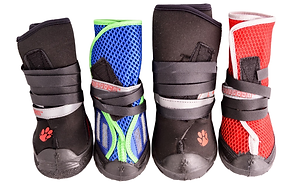
Time to focus on the integrated protective shoe: